Showing posts with label ice age. Show all posts

Monday, January 9, 2012

Is Another Ice Age Imminent?


Throughout the history of the planet, the world periodically experienced ice ages when most of the earth was covered in ice sheets and glaciers. They advance and retreat rhythmically on the earth’s surface. Scientists believe that the immediate past ice age ended just 11000 years ago. Many of them believe that it is time for the polar ice to advance towards the equator. May be global warming due to the pumping of greenhouse gases in the last few centuries has temporarily halted the rapid advance of ice sheets.
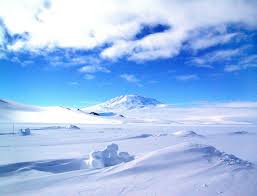
The ice advance is called glacial, and the warm period in between interglacial. In the past, the interglacial period lasted for around 11,000 years. The current interglacial has already lasted 11,000 years and it might end at any time. Some scientists think, as mentioned, that fuel burning has held the ice advance and some others think that it might trigger another ice age.  Anyway, we have already passed the normal interglacial and a new ice age is imminent, irrespective of this ‘triggering’. During this period, the cold, dry air above the Arctic and Antarctica carries little moisture and drops little snow there. An increase in global temperature could increase the amount of moisture in the air and thus increase the amount of snowfall. After years of more snowfall, the Polar Regions could accumulate more ice. These ice sheets will reflect more sunlight that falls on the earth making it cooler and thus helping the ice to advance.   
Unlike the movie, “The day after tomorrow”,  the next ice age will not happen in a matter of days, but most likely in a few decades. It may not start during our lifetimes. During the ice ages, almost all forms of life will find survival more difficult than during the warm periods like the one we experience now. We will run out of supplies and need to start living off the land as cultivation would become hard as humans will have to shift towards the equator. Food, shelter, water and clothing will be harder to procure. Those who live in the north latitudes will have to shift southward and there will be too much crowding near the equator which is already overpopulated. How many will survive? How hard will be our survival?  We have to wait and see.  

Friday, December 16, 2011

The end of Life


.         I knew from my very young days that we will have to die once. When I was 15,  I was afraid that I would be dying very soon.  Later, I understood that all living and non-living things are doomed to go. The Sun, the Earth, planets, Milky Way galaxy and the Universe will all have to end. The Sun, which looks mighty now, is dying gradually. It converts 5 million tons of hydrogen into helium through atomic fusion every second to shine as it does now. After 5 billion years the fuel will all be spent up and it will then swell up to a red giant star engulfing Mercury and Venus.   Astronomers even think it will swallow up the Earth too.  Even if the Earth survives, the intense heat from the red Sun will scorch our planet and make it completely impossible for life to survive. The Sun will still have enough heat and pressure at its core to begin another type of fusion, burning helium this time to carbon. When the helium runs out, the Sun won’t have enough gravity to keep the core temperature high to burn carbon. At this point, the Sun will blow out off its outer layers. The dying core of the Sun will become an Earth-sized object of carbon and oxygen called a white dwarf. It will slowly cool off over billions of years, eventually reaching the temperature of the Universe. It will then turn into a black dwarf and the Sun’s death will be complete.
The life on our planet Earth is totally dependent on the sequences of the Sun. But will the planet live as long as its Sun does? Not probably. It is almost certain that planet Earth will die much before. As soon as the Sun becomes a red giant it may swallow up the Earth or melt it to a slag. It could be a few billion years before the final death of the Sun.  
But what about life supported by this planet? Can it survive as long as the planet? Again it is an emphatic no. It would  have disappeared millions of years ahead.  When the heat from the Sun becomes unbearable life here simply vanishes.
But will humans survive until then?. Human life here will probably end up much before the fiery end of the planet Earth. As the Sun heats up, (already its heat is 30% more than that at its beginning) and expands, the atmosphere will disappear, the oceans will evaporate and life will end once and for all.
Yet again will we last that far (it is a few billion years from now). Not at all.  
The earth is subjected to certain cycles. We are into an ice age now. At present its pace is very slightly put on hold by the rapid increase in the carbon dioxide emissions due to human activity.  But the ice will slowly advance and the human civilization will end up with the next glacial phase five million years from now. After the ice age a supercontinent will again be formed and with the accompanying climatic changes complex life forms will end. The last vicissitudes of life will be obliterated with the sun becoming a red giant. Complex life will then be finished not only on the earth but in a vast section of the Milky Galaxy, if not the entire universe.   
 Is there a possibility for the humans to escape into the outer space? Well, yes if we succeed in establishing huge bases in the Moon or in the Mars. We will have to transport huge quantities of air, water, hospitals, food and sufficient numbers to stay for a prolonged period (over half a million years?) just to escape the incoming ice age. But as the sun heats up beyond life’s endurance levels everything will end. Even simple single-celled organisms cannot survive. Life is over once and for all.  An eternal darkness descends. There is no question of an escape as the whole solar system and much beyond would be scorched up.